Christmas Cute Reindeer Face: An Embroidery Review
As a professional embroidery designer and product reviewer, I approach every new digital asset with a critical eye. When evaluating the Christmas Cute Reindeer Face for potential use in client projects or shop inventory, my primary concern is always translatability. A graphic that looks charming on a screen does not automatically guarantee a successful stitch-out. This review examines this specific illustration from the perspective of a maker who needs reliable, high-quality results for real-world applications, moving beyond basic aesthetics to assess practical performance in machine embroidery design workflows.
First Impressions and Visual Personality
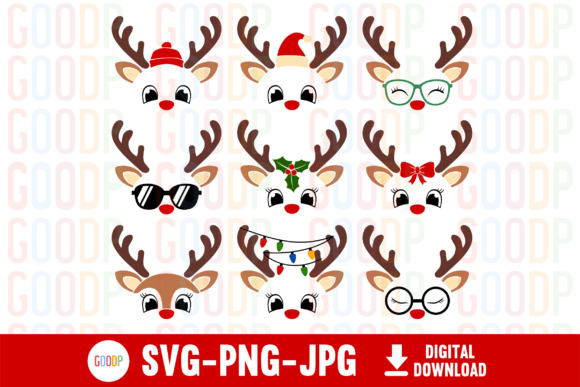
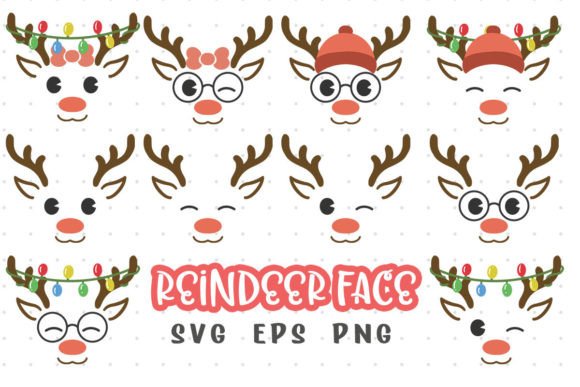
Upon opening the files, the immediate impression of the Christmas Cute Reindeer Face is one of approachable warmth. The aesthetic leans heavily into the "kawaii" or soft-nursery style, characterized by rounded features, expressive eyes, and balanced proportions. For an embroidery designer, these traits are significant. Sharp, jagged angles often translate poorly in thread, but the organic curves present in this reindeer illustration suggest a natural compatibility with satin stitch borders and smooth fill stitch areas.
The mood created is distinctly family-friendly and nostalgic without being overly traditional. It avoids the stiff formality of vintage holiday art, making it an ideal candidate for modern handmade products. As a vector-based graphic available in SVG, EPS, and PNG formats, the lines appear clean and scalable. This is crucial because when we convert graphics into embroidery files, crisp source lines reduce the time spent cleaning up nodes and adjusting anchor points. The visual personality feels versatile enough to bridge the gap between children’s apparel and adult holiday accessories, provided the color palette is adjusted during digitization to suit the target demographic.
Real-World Application: Stitching a Holiday Sweatshirt
To truly evaluate this asset, I mentally mapped it onto a current best-seller in my shop: a heavyweight cotton fleece sweatshirt intended for holiday family photos. In this scenario, the Christmas Cute Reindeer Face serves as a center-chest placement rather than a full-back print. The challenge with sweatshirt embroidery is managing fabric texture and pile. Fleece can swallow fine details, so the boldness of this reindeer face is actually a functional advantage.
When planning this project, I envision using the reindeer as a focal point surrounded by minimal text. Because the graphic elements are distinct, they allow for strategic use of applique design techniques. For example, the antlers could be executed in a textured felt applique to add tactile interest against the smooth fleece, while the face utilizes standard fill stitches. This mixed-media approach elevates the perceived value of the finished product. Customers looking for personalized gifts often respond better to dimensional textures than flat embroidery alone. However, this requires checking the stitch density carefully; too much coverage on fleece causes puckering, while too little allows the fabric grain to show through. The simplicity of this reindeer design allows for that necessary breathing room in the digitizing process.
Navigating Fabric Limitations and Hoop Constraints
While the Christmas Cute Reindeer Face is versatile, it demands careful consideration regarding substrate selection. Not all fabrics are created equal, and this design has specific limitations that makers must respect to maintain professional standards.
- Stretchy Knits and Ribbing: If applying this to a baby onesie or stretchy t-shirt, the design's width-to-height ratio matters. Wide designs can distort on ribbed knit. You may need to resize or rotate the Christmas Cute Reindeer Face to align with the fabric's grain, ensuring the running stitch outlines do not pull the garment out of shape.
- Textured Linens and Towels: For tea towels or pillow covers, the intricate facial expressions typical of cute illustrations can get lost in slubbed linen or terry cloth. In these cases, I recommend increasing the underlay density or adding a topping stabilizer to prevent stitches from sinking into the weave.
- Curved Surfaces: Placing this design on a structured cap requires verifying that the vertical height fits within your cap frame’s safe zone. The rounded ears or antlers might extend beyond the sewable area on curved surfaces, necessitating a modification of the original vector file before digitizing.
- Dark Fabrics: On navy or forest green backgrounds, ensure the reindeer’s features have sufficient contrast. White or cream thread on dark fabric requires higher stitch density to achieve opacity. Without this adjustment, the dark fabric will bleed through, muddying the "cute" aesthetic.
Impact on Product Value and Customer Trust
In the competitive landscape of Etsy sellers and small shop products, presentation is everything. Using high-quality illustrations like the Christmas Cute Reindeer Face directly influences buyer engagement. When customers browse listings, they are subconsciously assessing the professionalism of the maker. A design that looks pixelated, poorly proportioned, or generic signals low effort. Conversely, a well-executed reindeer face with clean lines and thoughtful color choices communicates brand consistency and attention to detail.
This extends to digital product previews and printable mockups. Because this asset includes PNG and SVG formats, creators can produce sharp, professional marketing materials before ever threading a needle. Clear mockups build trust. When a customer sees a crisp representation of what their custom apparel or embroidered patch will look like, conversion rates improve. Furthermore, the cohesive style of this illustration allows for collection building. Makers can pair the reindeer with other matching graphics to create bundled holiday embroidery projects, increasing average order value through perceived thematic unity.
Essential Designer Notes for Successful Execution
Before committing the Christmas Cute Reindeer Face to a commercial embroidery project or listing it as part of a finished product line, adhere to these practical protocols to ensure quality and compliance.
- Verify Licensing Terms: The product description mentions files for making your own vectors, but it does not explicitly state commercial usage rights for finished embroidered goods or digital redistribution. Always confirm whether you can sell items featuring this design or if it is strictly for personal use. This protects your craft business from legal issues.
- Test Stitch on Scrap Fabric: Never run a new design directly on a client’s garment. Test the Christmas Cute Reindeer Face on a scrap of the exact fabric you intend to use. Check for registration errors between color changes and verify that the stitch density interacts correctly with the material weight.
- Evaluate Thread Color Contrast: View your thread selection in natural light. Colors that look vibrant on a monitor may appear dull in rayon or polyester thread. Ensure the reindeer’s expression remains readable at a distance.
- Check Small Detail Viability: If resizing the design down for baby embroidery or sleeve cuffs, inspect tiny elements like eyelashes or nostrils. These may need to be removed or simplified into single running stitches to prevent thread breaks and needle damage.
- Stabilizer Selection: Match your stabilizer to the end-use. A tear-away might suffice for a tote bag design, but a cut-away is mandatory for sweatshirt embroidery to prevent distortion after washing. For sheer or lightweight fabrics used in nursery decor, consider water-soluble options to avoid visible backing.
- Mockup Validation: Create black and white mockups alongside color versions. This helps identify value contrast issues that color can mask. If the design reads well in grayscale, it will likely stitch clearly regardless of the specific thread colors chosen.
Ultimately, the Christmas Cute Reindeer Face offers a strong foundation for holiday crafting, provided it is treated with technical respect. By understanding its strengths in visual appeal and its limitations regarding fabric interaction, designers can transform this digital illustration into a profitable, professional-grade asset. Whether you are creating personalized gifts for the season or expanding your commercial embroidery catalog, success lies in the deliberate intersection of artistic charm and technical precision.